
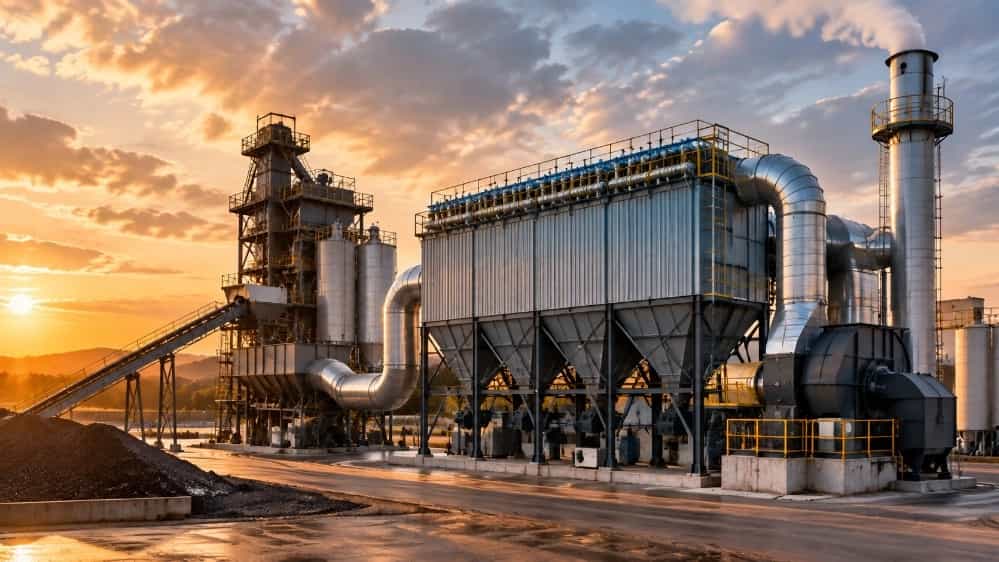
In asphalt factories, controlling dust and suspended particles is one of the most important parts of the production system. The process of drying and heating materials, transporting aggregates and furnace activity produces a significant volume of particles and hot gases. For this reason, it is very important to use the right equipment for exhaust gas purification. The thermal filter bag of the asphalt factory is one of the most important dust collection equipment in these industries, which is responsible for separating solid particles from the hot air flow and preventing dust from spreading to the environment.
The correct choice of Thermal filter bag is not only limited to the capacity of the device. Factors such as gas temperature, type and amount of dust, air flow rate, type of filtration bags, cleaning system, pressure drop, body material, sealing method and working conditions of the factory should be checked at the same time.
If you are looking for an industrial filtration system for your asphalt plant with a design suitable for capacity and working conditions, Poya Sanat can help you in the field of designing and manufacturing industrial dust collection equipment, choosing the right filter and implementing a solution suitable for the production line.
What is the asphalt factory thermal filter bag?
Asphalt factory thermal filter bag is a type of industrial dust collector that uses filter bags to separate dust particles in exhaust gases. The contaminated gas enters the filter bag chamber and after passing through the surface of the filter bags, solid particles remain on the outer or inner surface of the bag. The purified air then leaves the outlet of the device.
The main difference between thermal filter bag and conventional dust collectors is its ability to work with gases that have a higher temperature. In the asphalt plant, the gas exiting from the furnace and dryer can have a high temperature, and if the bag material is chosen incorrectly, the design is inappropriate, or the temperature is not controlled, the life of the filter will be greatly reduced.
Therefore, the thermal filter bag of the asphalt factory should be designed based on the actual conditions of the production line, and the use of a general model for all factories cannot have a favorable result.
Why is it important to use a thermal filter bag in an asphalt factory?
The most important reason for using a thermal filter bag is to control the emission of particles and dust. The dust produced in the asphalt factory can include fine aggregate particles, minerals and particles resulting from the drying process of the materials.
A suitable filtration system can provide several benefits, the most important of which are:
- Decreasing the emission of dust to the surrounding environment
- Increasing the efficiency of the dust removal system
- Helping to meet environmental requirements
- Reducing the waste of recyclable materials
- Improving the working conditions of employees
- Increasing the stability of the production line performance
- Reducing stoppages due to filtration problems
- Increasing the life of equipment related to the gas path
For this reason, the thermal filter bag of the asphalt factory should be considered one of the key equipments in the design of the pollution control system of these factories.
The most important technical features of thermal filter bags for asphalt factories
The proper performance of a thermal filter bag depends on a set of technical specifications. In the following, we will introduce the most important parameters that must be checked when designing or buying this equipment.
Filter bag resistance to heat
The most important feature in an asphalt plant thermal filter bag is choosing a bag that can withstand the gas temperature.
The material of the bag should be selected based on the actual temperature and working conditions. Some of the common materials used in industrial filters include polyester, polypropylene, PPS, aramid, and PTFE coated materials. Each of these materials has a different temperature range, chemical resistance and mechanical characteristics.
In the asphalt plant, it is not enough to pay attention to the maximum bag temperature. Continuous operation temperature, instantaneous temperature, gas humidity, chemical compounds and the possibility of thermal shock should also be checked.
Aeration capacity
Aeration capacity is one of the basic parameters in the design of thermal filter bag. If the volume of incoming air is greater than the actual capacity of the filter, the speed of gas passing through the surface of the bag will increase and there will be a possibility of increasing pressure drop and decreasing efficiency.
On the other hand, an excessively large design can increase the initial cost and occupy more space.
The appropriate capacity should be calculated according to the amount of furnace air output, factory capacity, type of dryer, operating conditions and fan specifications.
Filtration level
The total surface of the filter bags determines an important part of the filtration capacity of the device. The higher the amount of passing gas and dust load, the more appropriate filtration level will be needed.
In the design of thermal filter bag of asphalt plant, the ratio of gas volume to filter surface or filtration speed should be selected in such a way that the device can work without excessive pressure drop.
Bag cleaning system
Filter bags are gradually covered with dust during operation. If this layer becomes too thick, the gas passage resistance increases. For this reason, the cleaning system is very important.
Correct setting of pulse time and intensity in thermal filter bag can play an important role in increasing the life of the bag and controlling pressure drop.
Temperature control in the thermal filter bag of the asphalt factory
One of the most important issues in the design of the thermal filter bag of the asphalt factory is the control of the inlet gas temperature.
If the temperature exceeds the allowed range of the bag, the possibility of damaging the fibers, burning, reducing the mechanical resistance or reducing the life of the filter increases. On the other hand, excessive reduction of gas temperature may also cause humidity or condensation problems in some situations.
For this reason, the system must be equipped with temperature measurement and control equipment. The use of temperature sensors, control equipment and, if needed, bypass routes or diluting air can help protect the bags.
In the professional design of the thermal filter bag for the asphalt plant, the inlet and outlet temperatures are constantly taken into consideration.
Bag filter body material
The body of the device must have enough strength to withstand the pressure, temperature, vibrations and environmental conditions of the factory. Selection of sheet thickness, type of reinforcement profiles, welding quality and sealing method are important factors in the construction of thermal filter bag.
Pressure drop in the thermal filter bag
The pressure drop is one of the important indicators to check the performance status of the thermal filter bag of the asphalt plant. An excessive increase in pressure drop can indicate clogging of the bags, improper operation of the cleaning system, incorrect selection of the filtration level or a problem in the air flow path.
To control this situation, pressure is usually measured in different parts of the system. Pressure drop control helps the operator to recognize the right time to check and service the filter.
Also, pressure drop control can help reduce fan energy consumption, because the fan does not have to use more energy to pass gas through an excessively dirty filter.
The role of the fan in the performance of the thermal filter bag of the asphalt plant
Fan and filter bag should be designed as an integrated system. If the fan is not selected according to the actual pressure drop of the system, even a thermal filter bag of the asphalt plant with a suitable design cannot perform well.
Fan selection should be done based on the required flow rate, channel pressure drop, filter pressure drop, peripheral equipment, and height conditions above sea level.
Coordination between fan, channels, cyclone or pre-treatment equipment and bag filter plays an important role in the efficiency of the whole system.
Features of the dust extraction system
After separating the particles from the gas stream, the dust must be properly removed from the device. Using a suitable hopper, rotary valve, screw conveyor or similar equipment can be used to discharge dust.
Improper design of the discharge section can cause dust accumulation in the hopper and disrupt the performance of the thermal filter bag.
For this reason, the capacity of the hopper, the angle of the walls and the method of discharge should be selected according to the type and volume of dust.
Using a pre-filter or cyclone in the system
In some factories, primary separation equipment such as cyclones can be used before the gas enters the thermal filter bag of the asphalt factory.
The purpose of this work is to reduce the load of particles entering the bags and increase the stability of the system. Of course, the use of pre-treatment equipment should be based on engineering calculations and production line conditions.
The correct combination of pre-filtration equipment and filter bags can help reduce the filter load and increase the life of the bags.
How to choose the right thermal filter bag for the asphalt plant?
To choose the right thermal filter bag, several key parameters must be determined:
- Factory production capacity
- Output gas volume
- Actual gas temperature
- Maximum possible temperature
- Dust type and amount
- Suitable filter bag material
- Required filtration level
- Type of cleaning system
- Permissible pressure drop
- Fan capacity and specifications
- Installation conditions and available space
- Ground discharge method dust
- environmental requirements
- maintenance conditions and access to parts
The more accurate this information is, the more accurate the design of the thermal filter bag for the asphalt plant will be.
Maintaining and increasing the life of the thermal filter bag of the asphalt factory
Even the best thermal filter bag cannot work efficiently for a long time without proper maintenance.
Periodic inspection of bags, jet pulse system check, compressed air pressure control, pulse valves check, pressure drop control and body leakage check should be included in the factory maintenance program.
It is also necessary to replace the damaged bags as soon as possible. The presence of a torn bag can cause a part of the dust to pass directly and reduce the efficiency of the entire system.
Temperature control is also very important. A sudden rise in temperature must be detected quickly to avoid serious damage to the filter.
Signs of failure or improper functioning of the filter bag
Some signs can indicate a problem in the thermal filter bag of the asphalt factory. Including:
- Abnormal increase in pressure drop
- Increase in the amount of output dust
- Increase in compressed air consumption
- Reduction in system suction
- Torn or worn out bags
- Abnormal increase in filter temperature
- Dust accumulation in the hopper
- Irregular operation of jet pulse valves
- Increase in fan energy consumption
Early detection of these symptoms can prevent the long-term shutdown of the plant and increase the cost of repairs.
Advantages of custom design thermal filter bag for asphalt plant
Each asphalt plant has different operating conditions. For this reason, custom design thermal filter bag can have more advantages than choosing a ready and general device.
In custom design, plant capacity, gas volume, working temperature, bag type, number of compartments, type of cleaning system, fan and installation space are checked together.
This approach can make the equipment match the actual conditions of the factory and reduce the costs caused by the wrong choice.
Why dynamic industry to design and manufacture thermal filter bags?
Choosing the right manufacturer for the thermal filter bag of the asphalt plant is very important, because the final performance of the machine does not depend only on the material of the sheet or the number of bags. Air flow path design, capacity calculation, cleaning system selection, body construction and peripheral equipment coordination all have an effect on the final result.
Poya Sanat focusing on industrial equipment and dust removal systems, can review and design a solution that fits the project conditions. The purpose of this design is to achieve proper filtration, stable performance, easy access for repairs and reduce costs due to downtime and maintenance.
If you are planning to buy, build, replace or upgrade your asphalt plant thermal filter bag, check the technical specifications of the production line and exhaust gas conditions before choosing the final model. An engineered choice can have a significant impact on reducing long-term costs and increasing system productivity.
Summary
Asphalt factory thermal filter bag is one of the important equipments for dust control in asphalt production lines. The correct choice of this device should be made based on the gas temperature, volume of passing air, type of particles, filtration level, bag material, pressure drop, cleaning system and fan specifications.
The most important point is that the filter bag cannot be selected based on the dimensions or the number of bags. Basic design should consider all system components as a coordinated set.
From choosing the right material of the bag and gas temperature control to the design of the jet pulse system, dust discharge and fan selection, every part can affect the final performance of the thermal filter bag.
If you are looking for a reliable solution for the thermal filter bag of the asphalt factory, now discuss your factory specifications, production capacity and working conditions with the dynamic industry experts so that it will be possible to review and provide a solution suitable for your project.
To receive technical advice and to check the construction of thermal filter bags for asphalt factories, contact Puya Sanat and before purchasing, choose the device suitable for the actual conditions of your production line.